Record/Our Work/Field Research
03 — Our Work
Field ResearchField Research
Photo identification, acoustic monitoring and non-invasive sampling across a short field season.
Reporting figures
Year to 2026-09-07- Field days 2026
- 68
- Photo-IDs logged
- 4,210
- Hydrophone hours
- 6,600
- Scat samples
- 41
- Datasets shared
- 5
Assessment
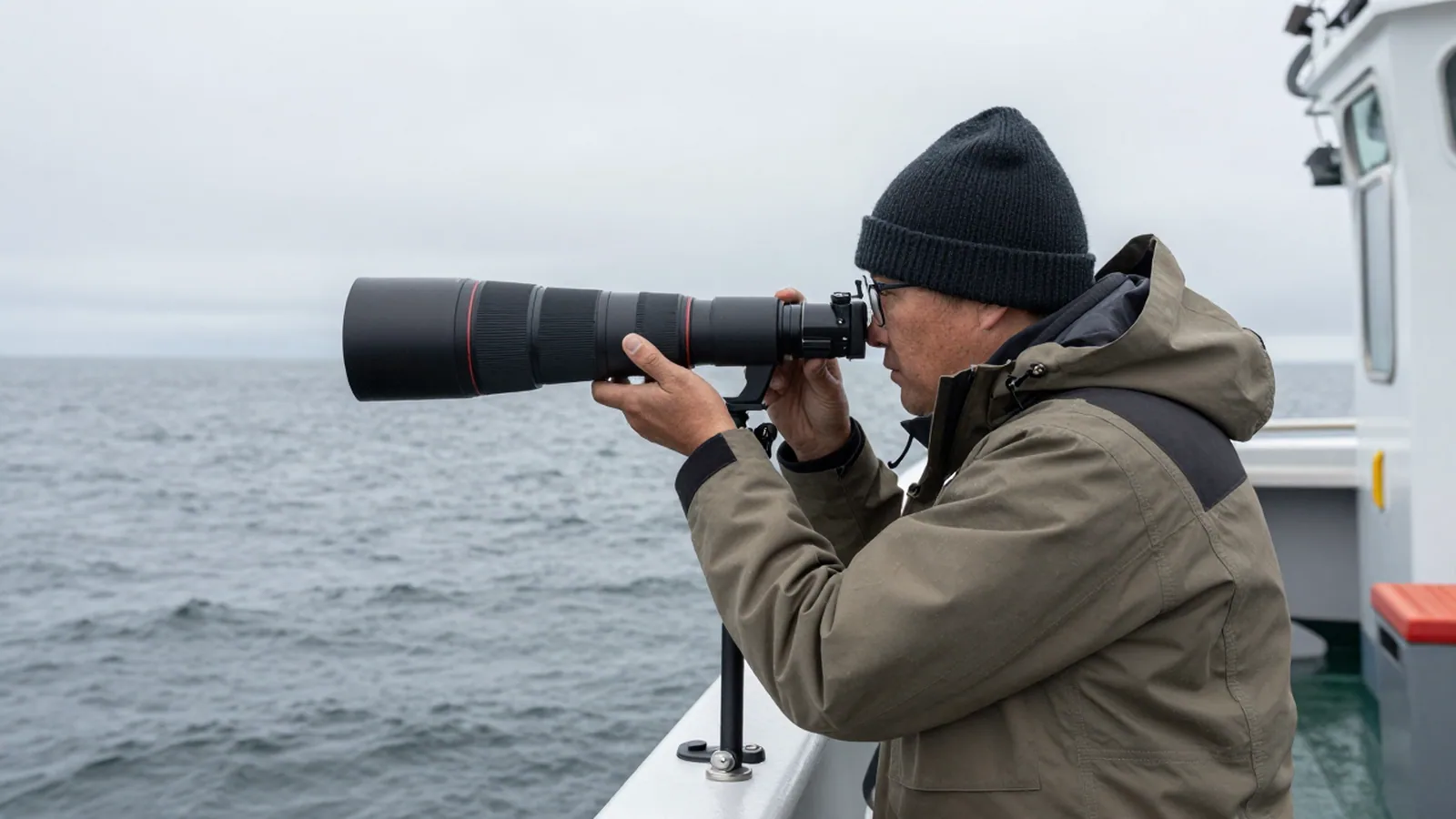
Our field programme is deliberately non-invasive. We identify individuals from photographs of the dorsal fin and saddle patch, record vocalisations on moored and towed hydrophones, and collect floating scat for hormone and diet analysis. Nothing we do requires touching an animal.
The field season is short and weather-dependent. Most of the year is spent processing: matching photographs against the catalogue, annotating thousands of hours of audio, and running lab work on samples collected over a handful of good days.
Everything we collect goes into shared regional datasets. A population this small cannot be studied by one organisation, and data hoarding costs whales.
Key points
6 observations- 01Photo-ID against the regional catalogue
- 02Moored and towed hydrophone arrays
- 03Non-invasive scat sampling
- 04Prey remains and diet analysis
- 05Hormone assays for pregnancy and stress
- 06All data shared into regional archives